Construction in the UAE brings numerous challenges that can only be overcome with the highest-quality materials. From the elevated heat and humidity to the demands of your world-class clients, only the very best will do whether you’re adding to Dubai’s skyline or building a custom home in Abu Dhabi.
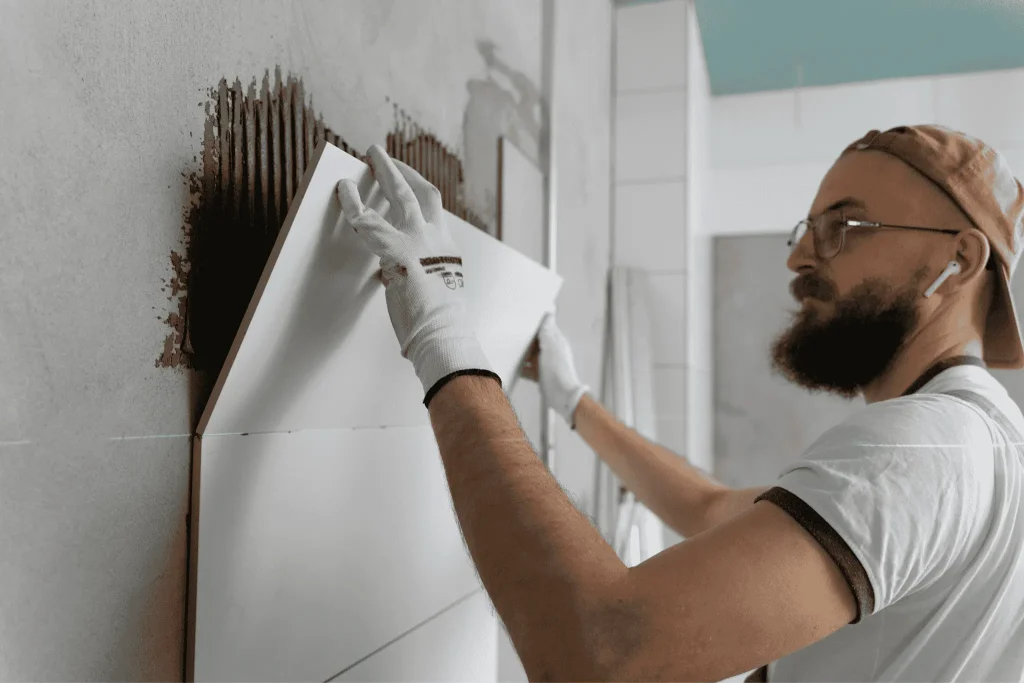
Tile work is a critical part of virtually all UAE construction, and it’s easy to focus on the tiles themselves. However, a builder cannot overlook one critical element, hidden beneath the tiles: the adhesive holding them on. There are numerous types of tile adhesive, for different materials and conditions, making it vital to pick the right adhesive for each job.
In this guide, we’ll cover your overall options in tile adhesives, address some specific applications, and offer advice on how to find the right tile adhesive manufacturers in the UAE.
Overview of Ceramic Tile Adhesives
There are several broad categories of tile adhesives, each generally suited for different applications.
- Cement-based: Cement-based tile adhesives are commonplace, inexpensive, and can be used on many different types of tiles. This makes cement one of the most popular options. However, be careful when using cement-based adhesives in UAE construction – cement reacts poorly to high humidity, weakening the bond. Cement adhesives should primarily be used indoors, rather than for exterior features.
- Epoxy-based: Epoxy is more expensive than cement but can be highly durable. Epoxy can also stand up to high heat, as well as being waterproof. This makes epoxy-based adhesives an excellent choice for swimming pools and other water features. In addition, the durability of epoxy makes it effective in areas which will see a lot of traffic or other daily abuse.
- Polyurethane-based: Polyurethane and other polymer-modified adhesives are somewhat elastic, and able to handle minor movement or thermal fluctuation without breaking the bond. This makes them a good choice for exterior tile and other stonework which will be in direct sunlight and exposed to other weather elements.
- Ready-mixed: Ready-mixed adhesives can be convenient and useful for small-scale or detailed work, such as bathrooms. However, be wary. They are typically less strong than other types of tile adhesive and won’t stand up to a lot of use or abuse. Other materials are usually preferable.
Requirements for Facade and Exterior Applications
When doing tile work for facades and other exterior applications, your number one concern will be the weather. Exterior tilework must be able to handle significant swings in temperature, from the heat of direct sunlight to the cold of night. In addition, they must be strong enough to handle weather events such as high winds and sandstorms.
Generally speaking, adhesives with a high polymer content are a must, as polymer-based adhesives are flexible enough to handle significant shifts in temperature. Be sure to match the particular adhesive to the type of tile you’re working with. For example, porcelain tiles tend to be both denser and less porous than ceramics, so they’ll require a stronger adhesive with better bonding capabilities.
In addition, give consideration to the grout used as well. Like the adhesive, the grout should also be flexible enough to handle temperature shifts. However, it must also be resistant to abrasion, so that it won’t be worn away by sand and other particulate matter in the air.
Swimming Pool and Wet-Area Installations
For swimming pools, water features, and other wet-area installations such as showers, waterproofing is of course the most critical factor. As mentioned above, high-grade epoxy adhesives and epoxy-based grout are often the best choice for creating durable waterproof tile work.
However, depending on your needs, there are a few other options here as well. A polymer-modified waterproofing mortar can be utilized on a wide variety of tile and stone types and may work better than epoxy for certain combinations of tile and substrate. There are also flexible cement-based adhesives that, with the right chemical additives, can be resistant to both thermal shock and continuous water immersion. Those would be best for exterior water features that have to resist water and weather.
In any case, select a grout with high chemical resistance, since it will be in constant contact with water treatment chemicals such as chlorine and acid.
Selecting a Manufacturer
Ideally, you should get all of your tile adhesives and grout from the same source. A single-tile adhesive manufacturer in the UAE will be able to provide end-to-end support, while also ideally helping you find the right combination of materials to get your job done.
The most important factors to look for here include:
- Overall reputation. Are their products used in many different projects?
- Workability. Adhesives can be tricky to work with, so the easier they are to handle, the better for your project.
- Adhesion open time: How long can you continue to work with an adhesive after it’s been applied, while still forming a proper bond? Leave some wriggle room.
- Technical support: How much assistance will they give you when using their products?
- Low VOC emissions: Volatile Organic Compounds (VOCs) are chemicals which are released by compounds over time. It’s critical to choose a manufacturer whose products are low-VOC, particularly for indoor work, so the fumes don’t build up.
Choose KARÇIMSA Yapi Kimyasallari for Tile Adhesives in the UAE
KARÇIMSA is among the top tile adhesive manufacturers in the UAE. Originally founded in Turkey, we’ve established ourselves with over twenty years’ experience providing top-quality concrete and chemicals for building projects across the Middle East. We offer a wide range of tile adhesives and grouts, backed up by expert assistance that can help you overcome any tricky construction challenge.
Click here to browse our full product catalog, or contact us directly for more detailed inquiries.